Soa Technology

Apple releases new iPadOS, iOS and macOS updates: All the new features and bug fixes explained

Apple has announced a new update for its most popular products: iPhones, iPads and Macs. The new updates to iOS, MacOS and iPadOS majorly focus on improving performance and introducing bug fixes to the software, as opposed to bringing new features and functionality.

The updates iOS 13.6.1, iPadOS 13.6.1, and macOS 10.15.6 fix a number of issues, however, of the three, it is the update for iPhones and iPads that is more interesting. The latest iOS update brings the fix for a “green tint” issue that was first seen by iPhone 11 users. Apart from this, the update also fixes an issue that resulted in unneeded system data files not be automatically deleted when storage is low. The same has also been fixed on the iPadOS 13.6.1 which suffered from the exact issue.

The iOS 13.6.1 also fixes a thermal management issue that was mostly reported by iPhone 11 users. This issue also led to a green tint being noticed by users mostly when using Night Shift or while in a dark room. This issue had also been noticed by some users on iPhone X. However, not too many reports of this had emerged online. Additionally, this new update also brings a fix for an issue where Exposure Notifications were being disabled for some users.

Interestingly, these could be the last updates for iPhones and iPads under the iOS 13and iPadOS 13 name. After this, Apple is expected to start rolling out iOS 14 and iPadOS 14 updates to users.

For iPhone and iPads users, the new update can be downloaded simply navigating to the settings page, then General and then Software Update. To initiate the update, the user would need to ensure good amount of storage on the phone and also sufficient battery.

The phone would also require a fast data connection.As for the MacOS 10.15.6, the new update fixes a stability issue that could occur when running virtualization apps. It also resolves an issue where an iMac (Retina 5K, 27-inch, 2020) may appear washed out after waking from sleep.

How Do I integrate Opencart with Shiprocket?

Integrating Opencart with ShipRocket

Following are the ways to integrate Opencart with ShipRocket. Before you proceed with these steps, make sure that you have installed the Shiprocket plugin on your Opencart account.

Supported Version :

2.3.*,
2.2.0.0,
2.1.0.1, 2.1.0.2,
2.0.0.0, 2.0.1.0, 2.0.1.1, 2.0.2.0, 2.0.3.1

(Link to Download Extension)

Step I – Configuration at Opencart Extension

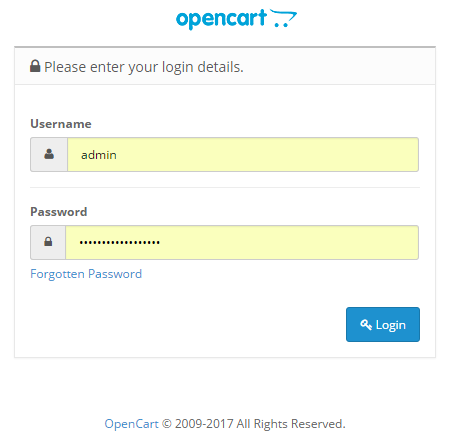
  1. Login to your Opencart admin panel.

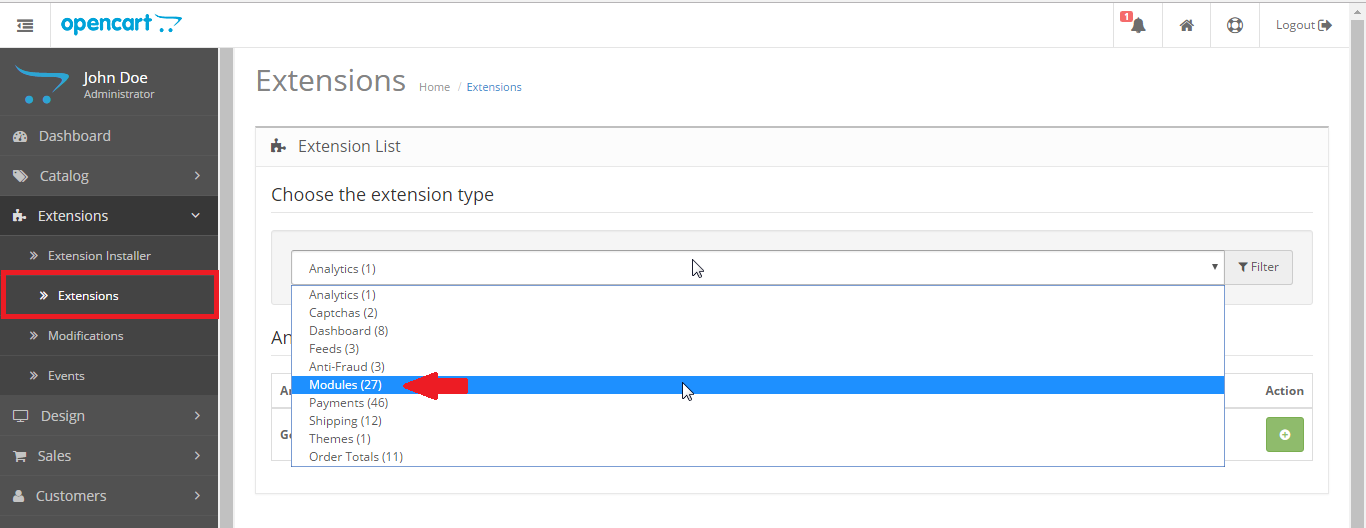
2. Go to Extensions Tab -> Extension Installer. Upload the extension file downloaded from the link given above.

3. Once the file is successfully uploaded. Go to Extensions Tab -> Modules.

4. Add OpenCart Rest API.

5. Once the API’s are installed, click on the Add New button, enter the title as ShipRocket and click Save

6. Now you will get Public Key & Private Key for Opencart. Copy and save them.

Step II – Configuration at ShipRocket panel

1. Login to ShipRocket panel.

2. Go to Settings->Channels.

3. Click on “Add New Channel” Button.

4. Click on Opencart -> Integrate.

5. Switch “On” the Order and Inventory Sync as per your requirement.

6. Fill in the Parameters i.e Store Url,  public Hash, Private hash (as saved from the OpenCart panel) and Opencart version 

7. Click “Save Channel & Test Connection”.

8. The green icon indicates that the channel has been successfully configured.

Soa Technology

amsung Galaxy Watch 3 appears in last-minute video leaks

  • The Samsung Galaxy Watch 3 has appeared in two how-to videos from AT&T.
  • The videos describe processes like resetting the watch and changing watch faces.
  • You also get a good look at how to navigate the home screen of the device.

The Samsung Galaxy Watch 3 is launching tomorrow alongside the Galaxy Note 20 series but leaks and rumors these past few months have left little to the imagination. Samsung’s new flagship smartwatch has appeared in renders, its firmware has outed its features, it’s already on the shelves at some retail stores, and now, it has appeared in official AT&T how-to videos leaked by tipster Evan Blass.

The two instructional videos show the front of the Samsung Galaxy Watch 3 and describe processes like resetting the watch, changing watch faces, adding widgets to the home screen, and more. We can also see the rotating dial of the smartwatch in action in these videos.

In addition, you get a good sense of the watch’s interface and how to navigate the home screen. For instance, swiping right brings up the notifications menu, swiping left brings up the widgets, exercise modes, and apps, and swiping down brings up the Moments bar to view status icons, access settings, or activate features quickly. You can see all this in the two leaked AT&T instructional videos below.

All that’s left for Samsung to do now is to unveil the Galaxy Watch 3 price and availability details. As we mentioned before, the watch is already on shelves in some retail stores and according to prices spotted by leaker Max Weinbach at a Target store, it can go for anywhere between $399.99 to $479.99 depending on the model. Weinbach also claims that the “street date” for the device is August 6 so that’s when you can expect to buy it online or from brick and mortar stores.

how to login aws using password instead of key file

how to connect filezilla to aws ec2 using password

allow ec2 ubuntu server login using password instead of pem file

To enable a password authentication, you create a password, update the /etc/ssh/sshd_config file, and then restart the SSH service. The following procedure is tested on Amazon Linux, RHEL, SUSE, and Ubuntu.

Note: Using a password-based login rather than key pair authentication has security implications. Therefore, password-based login isn’t recommended. Also, it’s a best practice to minimize the source IP addresses of the security group rules associated with your instance to prevent an SSH attack.

Resolution

1.    From an SSH client, log in to your EC2 instance.

Use one of the following user names:

  • For Amazon Linux, the user name is ec2-user.
  • For RHEL 5, the user name is either root or ec2-user.
  • For Ubuntu, the user name is ubuntu.
  • For SUSE Linux, the user name is either root or ec2-user.

If ec2-user or root doesn’t work, check with your AMI provider.

2.    Set a password for user. The example below uses ec2-user as the user:

$ sudo passwd ec2-user
Changing password for user ec2-user.
New password:
Retype new password:

For example, a successful response looks like this:

passwd: all authentication tokens updated successfully.

3.    Update the PasswordAuthentication parameter in the /etc/ssh/sshd_config file:

PasswordAuthentication yes

4.    Restart the SSH service.

For Amazon Linux, RHEL 5, and SUSE Linux, use this command:

sudo service sshd restart

For Ubuntu, use this command:

sudo service ssh restart

5.    Exit the SSH client, and then log in to test the password authentication.

SOA (Service-Oriented Architecture)

Service-Oriented Architecture (SOA) and Web Services: The Road to Enterprise Application Integration (EAI)

Most enterprises have made extensive investments in system resources over the course of many years. Such enterprises have an enormous amount of data stored in legacy enterprise information systems (EIS), so it’s not practical to discard existing systems. It’s more cost-effective to evolve and enhance EIS. But how can this be done? Service Oriented Architecture (SOA) provides a cost-effective solution.

SOA is not a new concept. Sun defined SOA in the late 1990’s to describe Jini, which is an environment for dynamic discovery and use of services over a network. Web services have taken the concept of services introduced by Jini technology and implemented it as services delivered over the web using technologies such as XML, Web Services Description Language (WSDL), Simple Object Access Protocol (SOAP), and Universal Description, Discovery, and Integration(UDDI). SOA is emerging as the premier integration and architecture framework in today’s complex and heterogeneous computing environment. Previous attempts didn’t enable open interoperable solutions, but relied on proprietary APIs and required a high degree of coordination between groups. SOA can help organizations streamline processes so that they can do business more efficiently, and adapt to changing needs and competition, enabling the software as a service concept. eBay for example, is opening up its web services API for its online auction. The goal is to drive developers to make money around the eBay platform. Through the new APIs, developers can build custom applications that link to the online auction site and allow applications to submit items for sale. Such applications are typically aimed at sellers, since buyers must still head to ebay.com to bid on items. This type of strategy, however, will increase the customer base for eBay.

SOA and web services are two different things, but web services are the preferred standards-based way to realize SOA. This article provides an overview of SOA and the role of web services in realizing it. The article provides:

  • An overview of software as a service
  • A tutorial on SOA
  • An overview of Sun’s platforms for building web services
  • Guidelines for designing interoperable web services
  • Challenges in moving to SOA
  • An overview of Java Business Integration (JSR 208)
  • A discussion of web services for enterprise application integration

Service-Oriented Architecture

SOA is an architectural style for building software applications that use services available in a network such as the web. It promotes loose coupling between software components so that they can be reused. Applications in SOA are built based on services. A service is an implementation of a well-defined business functionality, and such services can then be consumed by clients in different applications or business processes.

SOA allows for the reuse of existing assets where new services can be created from an existing IT infrastructure of systems. In other words, it enables businesses to leverage existing investments by allowing them to reuse existing applications, and promises interoperability between heterogeneous applications and technologies. SOA provides a level of flexibility that wasn’t possible before in the sense that:

  • Services are software components with well-defined interfaces that are implementation-independent. An important aspect of SOA is the separation of the service interface (the what) from its implementation (the how). Such services are consumed by clients that are not concerned with how these services will execute their requests.
  • Services are self-contained (perform predetermined tasks) and loosely coupled (for independence)
  • Services can be dynamically discovered
  • Composite services can be built from aggregates of other services

SOA uses the find-bind-execute paradigm as shown in Figure 1. In this paradigm, service providers register their service in a public registry. This registry is used by consumers to find services that match certain criteria. If the registry has such a service, it provides the consumer with a contract and an endpoint address for that service.

Figure 1: SOA’s Find-Bind-Execute Paradigm

SOA-based applications are distributed multi-tier applications that have presentation, business logic, and persistence layers. Services are the building blocks of SOA applications. While any functionality can be made into a service, the challenge is to define a service interface that is at the right level of abstraction. Services should provide coarse-grained functionality.

Realizing SOA with Web Services

Web services are software systems designed to support interoperable machine-to-machine interaction over a network. This interoperability is gained through a set of XML-based open standards, such as WSDL, SOAP, and UDDI. These standards provide a common approach for defining, publishing, and using web services.

Sun’s Java Web Services Developer Pack 1.5 (Java WSDP 1.5) and Java 2 Platform, Enterprise Edition (J2EE) 1.4 can be used to develop state-of-the-art web services to implement SOA. The J2EE 1.4 platform enables you to build and deploy web services in your IT infrastructure on the application server platform. It provides the tools you need to quickly build, test, and deploy web services and clients that interoperate with other web services and clients running on Java-based or non-Java-based platforms. In addition, it enables businesses to expose their existing J2EE applications as web services. Servlets and Enterprise JavaBeans components (EJBs) can be exposed as web services that can be accessed by Java-based or non-Java-based web service clients. J2EE applications can act as web service clients themselves, and they can communicate with other web services, regardless of how they are implemented.

Web Service APIs

The Java WSDP 1.5 and J2EE 1.4 platforms provide the Java APIs for XML (JAX) that are shown in Table 1.

Table 1: Java APIs for XML (JAX) provided by J2EE 1.4

APIDescription
Java API for XML Processing (JAXP) 1.2This API lets you process XML documents by invoking a SAX or DOM parser in your application. JAXP 1.2 supports W3C XML Schema.
Java API for XML-based RPC (JAX-RPC) 1.1This is an API for building and deploying SOAP+WSDL web services clients and endpoints.
Java APIs for XML Registries (JAXR) 1.0.4This is a Java API for accessing different kinds of XML registries. It provides you with a single set of APIs to access a variety of XML registries, including UDDI and the ebXML Registry. You don’t need to worry about the nitty-gritty details of each registry’s information model.
SOAP with Attachments API for Java (SAAJ) 1.2This API lets you produce and consume messages conforming to the SOAP 1.1 specification and SOAP with Attachments note.
JSR 109: Web services for J2EE 1.0JSR 109 defines deployment requirements for web services clients and endpoints by leveraging the JAX-RPC programming model. In addition, it defines standard deployment descriptors using the XML Schema, thereby providing a uniform method of deploying web services onto application servers through a wide range of tools.

Note: JAX-RPC 1.1 and SAAJ 1.2 include support for the Web Services Interoperability (WS-I) and the Web Services Interoperability Basic Profile (WSI-BP), currently being developed by http://www.ws-i.org, which provides a set of guidelines on how to develop interoperable web services.

With the APIs described in Table 1, you can focus on high-level programming tasks, rather than low-level issues of XML and web services. In other words, you can start developing and using Java WSDP 1.5 and J2EE 1.4 web services without knowing much about XML and web services standards. You only need to deal with Java semantics, such as method invocation and data types. The dirty work is done behind the scenes, as discussed further in the next section.

Figure 2 illustrates how the JAXR and JAX-RPC APIs play a role in publishing, discovering, and using web services and thus realizing SOA.

Figure 2: Web services Publish-Discover-Invoke model

Web Services Endpoints in J2EE 1.4

The J2EE 1.4 platform provides a standardized mechanism to expose servlets and EJBs as web services. Such services are considered web service endpoints (or web service ports), and can be described using WSDL and published in a UDDI registry so that they can be discovered and used by web service clients.

Once a web service is discovered, the client makes a request to a web service. The web service processes the request and sends the response back to the client. To get a feeling for what happens behind the scenes, consider Figure 2, which shows how a Java client communicates with a Java web service in the J2EE 1.4 platform. Note that J2EE applications can use web services published by other providers, regardless of how they are implemented. In the case of non-Java-based clients and services, the figure would change slightly, however. As mentioned earlier, all the details between the request and the response happen behind the scenes. You only deal with typical Java programming language semantics, such as Java method calls, Java data types, and so forth. You needn’t worry about mapping Java to XML and vice-versa, or constructing SOAP messages. All this low-level work is done behind the scenes, allowing you to focus on the high-level issues.

Figure 3: A Java Client Calling a J2EE Web

Note: J2EE 1.4 and Java WSDP 1.5 support both RPC-based and document-oriented web services. In other words, once a service is discovered, the client can invoke remote procedure calls on the methods offered by the service, or send an XML document to the web service to be processed

Interoperability

Interoperability is the most important principle of SOA. This can be realized through the use of web services, as one of the key benefits of web services is interoperability, which allows different distributed web services to run on a variety of software platforms and hardware architectures. The Java programming language is already a champion when it comes to platform independence, and consequently the J2EE 1.4 and Java WSDP 1.5 platforms represent the ideal platforms for developing portable and interoperable web services.

Interoperability and portability start with the standard specifications themselves. The J2EE 1.4 and Java WSDP 1.5 platforms include the technologies that support SOAP, WSDL, UDDI, and ebXML. This core set of specifications — which are used to describe, publish, enable discovery, and invoke web services — are based on XML and XML Schema. If you have been keeping up with these core specifications, you know it’s difficult to determine which products support which levels (or versions) of the specifications. This task becomes harder when you want to ensure that your web services are interoperable.

The Web Services Interoperability Organization (WS-I) is an open, industry organization committed to promoting interoperability among web services based on common, industry-accepted definitions and related XML standards support. WS-I creates guidelines and tools to help developers build interoperable web services.

WS-I addresses the interoperability need through profiles. The first profile, WS-I Basic Profile 1.0 (which includes XML Schema 1.0, SOAP 1.1, WSDL 1.1, and UDDI 2.0), attempts to improve interoperability within its scope, which is bounded by the specification referenced by it.

Since the J2EE 1.4 and Java WSDP 1.5 platforms adhere to the WS-I Basic Profile 1.0, they ensure not only that applications are portable across J2EE implementations, but also that web services are interoperable with any web service implemented on any other platform that conforms to WS-I standards such as .Net.

Challenges in Moving to SOA

SOA is usually realized through web services. Web services specifications may add to the confusion of how to best utilize SOA to solve business problems. In order for a smooth transition to SOA, managers and developers in organizations should known that:

  • SOA is an architectural style that has been around for years. Web services are the preferred way to realize SOA.
  • SOA is more than just deploying software. Organizations need to analyze their design techniques and development methodology and partner/customer/supplier relationship.
  • Moving to SOA should be done incrementally and this requires a shift in how we compose service-based applications while maximizing existing IT investments.

Sun has recognized the challenges customers face in moving to SOA and has developed an SOA Opportunity Assessment service offering that leverages years of experience in delivering enabling technology solutions that met the unique needs of each customer. Sun’s SOA Opportunity Assessment provides customers with an analysis of their organization’s readiness to move to SOA, and a set of best practices developed to complement this service offering, and helps them identify business-relevant opportunities for building their service-oriented applications using architectural best practices and reusable design patterns. For more information on this as well as additional Sun SOA services offerings.

In addition, Sun’s Java BluePrints provide developers with guidelines, patterns, and sample applications. Java BluePrints has a book on Designing Web Services with J2EE 1.4, which is the authoritative guide to the best practices for designing and integrating enterprise-level web services using J2EE 1.4. It provides the guidelines, patterns, and real-world examples architects and developers need in order to shorten the learning curve and start building robust, scalable, and portable solutions.

Java Business Integration

Enterprises have invested heavily in large-scale packaged application software such as enterprise resource planning (ERP), supply chain management (SCM), customer relationship management (CRM), and other systems to run their businesses. IT managers are being asked to deliver the next generation of software applications that will provide new functionality, while leveraging existing IT investments. The solution to this is integration technology; the available integration technology solutions, however, are proprietary and do not interoperate with each other. The advent of web services and SOA offers potential for lower integration costs and greater flexibility.

JSR 208 Java Business Integration (JBI), is a specification for a standard that describes plug-in technology for system software that enables a service-oriented architecture for building integration server software. JBI adopts SOA to maximize the decoupling between components, and create well-defined interoperation semantics founded on standards-based messaging. JSR 208 describes the service provider interfaces (SPIs) that service engines and bindings plug into, as well as the normalized message service that they use to communicate with each other. It is important to note that JSR 208 doesn’t define the engines or tools themselves. JSR 208 has the following business advantages:

  • It is itself a service-oriented architecture that will be highly flexible, extensible, and scalable.
  • Service engines could be implemented in any language as long as they support the SPI definition implemented by JSR 208 compliant systems.
  • New engines can be added to the container by plugging them into the standard SPI and defining the messages they will use to interact with the rest of the system.
  • ISVs that specialize in one of these components could be able to plug special-purpose engines into industry-standard integration solutions.
  • Open interfaces will enable free and open competition around the implementation of these engines. This means that customers will be free to choose the best solution available, and their integration code can be migrated between implementations.

A JSR 208 example architecture is shown in Figure 4.

Figure 4: An Example Architecture Based on JSR 208

As you can see, JBI provides an environment in which plug-in components reside. Interaction between the plug-in components is by means of message-based service invocation. Services produced and consumed by plug-in components are modeled using WSDL (version 2.0). A normalized message consists of two parts: the abstract XML message, and message metadata (or message context data), which allows for association of extra information with a particular message as it is processed by plug-in and system components.

Project Shasta

Sun’s Project Shasta, which is based on the JSR 208 architecture, aims to build a next-generation integration solution. This project will be implemented on Sun’s J2EE application server and leverage J2EE services such as Java Message Service (JMS), J2EE Connector Architecture (JCA), failover, and high availability. It will feature many of the emerging standards in the web services (such as web service notification, coordination, and transaction management) and integration space. The project will be focused on web services and using them to enable the creation of service-oriented architectures. Figure 5 depicts what a fully implemented product could look like.

Figure 5: An Example Architecture Based on JSR 208

Web Services and J2EE 1.4 for Enterprise Application Integration

Web services, which build on knowledge gained from other mature distributed environments (such as CORBA and RMI), offer a standardized approach to application-to-application communication and interoperability. They provide a way for applications to expose their functionality over the web, regardless of the application’s programming language or platform. In other words, they allow application developers to master and manage the heterogeneity of EIS.

Web services let developers reuse existing information assets by providing developers with standard ways to access middle-tier and back-end services and integrate them with other applications.

Since web services represent gateways to existing back-end servers, strong support for back-end integration is required. This is where the J2EE platform comes into play. The J2EE platform provides industry-standard APIs (such as the J2EE Connector Architecture, the JDBC API, Java Message Service (JMS), among others) for accessing legacy information systems. J2EE 1.4 (which supports web services) provides an excellent mechanism to integrate legacy EIS and expose their functionality as interoperable web services, thereby making legacy data available on heterogeneous platform environments.

Conclusion

The advent of web services and SOA offers potential for lower integration costs and greater flexibility. An important aspect of SOA is the separation of the service interface (the what) from its implementation (the how). Such services are consumed by clients that are not concerned with how these services will execute their requests. Web services are the next step in the Web’s evolution, since they promise the infrastructure and tools for automation of business-to-business relationships over the Internet.

JSR 208 (Java Business Integration) has the potential to revolutionize the industry as it provides a way for platform vendors, system integrators, and enterprise software developers to collaborate on integration solutions that have the flexibility to move with a changing market.

By Qusay H. Mahmoud,

Website Development and Designing Service

Why we need Website?

Now these days website play major role in business. Main identity of any business is website. Using website you can promote your business nationally or internationally. Website helping you to provide branches nationally or internationally without any physical investment.

If you are shopkeeper you can easily sale your product without worrying about your limited boundary. Using website you can manage your inventory easily. Using website you can promote business B2B and B2C. B2B means business to business and B2C means business to consumer.

Soa Technology (Aditya Kumar Singh) solve your problems about website development and designing.

We are expertise to develop blogs, eCommerce (shopping), static, dynamic, social, news, management (school, college) websites. We deliver your product with 100% satisfactory to meet your requirement.

Technology and Platform we are used:

PHP, Laravel, Opencart, WordPress, Drupal, Magneto, Jquery, Html 5, Css etc.

For eCommerce platform:

  1. WooCommerce
  2. Magento
  3. Drupal
  4. Joomla
  5. Opencart
  6. Prestashop
  7. OsCommerce
  8. Zencart
  9. X-Cart
  10. Virtuemart
  11. Jigoshop
  12. Zeuscart

Android Application Development

Android App Development Services

We Offer Custom Android App Development Services For Businesses & Startups To Engage Users Effectively

Finding a true partner that can provide expertise on mobile technology has become crucial for startups, large and small organizations across a wide range of businesses. Mobisoft delivers the Android technology expertise necessary for your Android app development project. We also help businesses to improve their operational efficiencies, cost structure and remain technologically competitive.

Key Offerings

Our Team Is Well-Versed In Providing Services From Android Specific Design To Android OS Customization

Android is most widely used mobile operating systems across the globe and also one of the complex ecosystems with myriad of phones of different dimensions, manufacturers and form factors.

Our Android app development service adheres to the best in class Android architectural standards, and complete understanding of comprehensive Android ecosystem helping us building scalable and sustainable Android applications across Android platforms like Android phone, tablets, Android Wear and Android TV.

  • Android Specific UX/UI Design
  • Native Android App Development
  • Hybrid App Development (Xamarin, PhoneGap)
  • Android OS Customization
  • Android Widget Development Services
  • Android Launchers App Development
  • Android App Test Automation
  • Android App Porting/Redesign
  • App Support, Maintenance & Optimization.

Our Work

Have a glance at the range of brilliant Android applications developed by us. Opt for scalable and powerful apps with a touch of excellence.

Search Engine Optimization

Best Techniques for Search Engine Optimization

  1. Page Size Should be minimal
  2. Page Load time is faster
  3. Page title
  4. Page description
  5. Page keyword
  6. Page language tag
  7. Page robots, index tag
  8. SSL require for more visibility
  9. Minified CSS, JS, Html file should be used
  10. alt attribute of img tag should not empty
  11. Remove 404 error in page
  12. Page URL name should be descriptive or informative
  13. H1, H2, H3, H4 tag presented in page

Digital Marketing

What Is Digital Marketing?

At a high level, digital marketing refers to advertising delivered through digital channels such as search engines, websites, social media, email, and mobile apps. While this term covers a wide range of marketing activities, all of which are not universally agreed upon, we’ll focus on the most common types below.

Paid Search

Paid search, or pay-per-click (PPC) advertising, typically refers to the “sponsored result” on the top or side of a search engine results page (SERP). You only pay when your ad is clicked. You can tailor your PPC ads to appear when specific search terms are entered, creating ads that are targeted to a particular audience.

PPC ads are flexible, visible, and most importantly, effective for many different types of organizations. They are also contextual advertisements—ads that appear when a person is searching for a particular keyword or term.

Search Engine Optimization

Simply put, search engine optimization (SEO) is the process of optimizing the content, technical set-up, and reach of your website so that your pages appear at the top of a search engine result for a specific set of keyword terms. Ultimately, the goal is to attract visitors to your website when they search for products, services, or information related to your business.SEO can almost be viewed as a set of best practices for good digital marketing. It enforces the need for a well-constructed and easy-to-use website, valuable and engaging content, and the credibility for other websites and individuals to recommend you by linking to your site or mentioning it in social media posts.

Content Marketing

Have you heard the expression, “Content is king?” If not, you have now. Great content is the fuel that drives your digital marketing activities:

  • It is a key pillar of modern SEO
  • It helps you get noticed on social media
  • It gives you something of value to offer customers in emails and paid search ads

Creating clever content that is not promotional in nature, but instead educates and inspires, is tough but well worth the effort. Offering content that is relevant to your audience helps them see you as a valuable source of information. On top of that, resourceful content makes it less likely that they will tune you out.

Social Media Marketing

People aren’t just watching cat videos and posting selfies on social media these days. Many rely on social networks to discover, research, and educate themselves about a brand before engaging with that organization. For marketers, it’s not enough to just post on your Facebook and Twitter accounts. You must also weave social elements into every aspect of your marketing and create more peer-to-peer sharing opportunities. The more your audience wants to engage with your content, the more likely it is that they will want to share it. This ultimately leads to them becoming a customer. And as an added bonus, they will hopefully influence their friends to become customers, too.

Email Marketing

Email has been around for more than two decades, and it’s not going anywhere anytime soon. It’s still the quickest and most direct way to reach customers with critical information. The reason is simple: Consumers are very attached to their emails. Just ask yourself how many times you have checked your email in the past hour…See what we mean?


But great marketers know that not just any email will do. Successful email campaigns must be engaging, relevant, informative, and entertaining. To succeed, your marketing emails should satisfy these five core attributes:

  • Trustworthy
  • Relevant
  • Conversational
  • Be coordinated across channels
  • Strategic

Mobile Marketing

As mobile devices become an increasingly integral part of our lives, it’s vital that marketers understand how to effectively communicate on this unique and extremely personal channel. Mobile devices are kept in our pockets, sit next to our beds, and are checked constantly throughout the day. This makes marketing on mobile incredibly important but also very nuanced.

From SMS and MMS to in-app marketing, there are many ways to market on mobile devices, so finding the right method for your particular business is key. Beyond the mechanisms to deliver your message, you also need to think about coordination of your marketing across digital channels and make sure mobile is a part of that mix.

Marketing Automation

Marketing automation is an integral platform that ties all of your digital marketing together. Without it, your campaigns will look like an unfinished puzzle with a crucial missing piece. Marketing automation software streamlines and automates marketing tasks and workflows. Most importantly, it measures the results and ROI of your digital campaigns, helping you to grow revenue faster.

When used effectively, marketing automation will help you gain much-needed insight into which programs are working and which aren’t. It will give you the metrics needed to speak confidently about digital marketing’s impact on the bottom line.

Software Development

Software Development

Software development is the collective processes involved in creating software programs, embodying all the stages throughout the systems development life cycle (SDLC).

SDLC methodologies support the design of software to meet a business need, the development of software to meet the specified design and the deployment of software to production.  A methodology should also support maintenance, although that option may or may not be chosen, depending on the project in question.

The waterfall model, the original SDLC method, is linear and sequential, generally following these stages in order:

1) Identification of required software
2) Analysis of the software requirements
3) Detailed specification of the software requirements
4) Software design
5) Programming
6) Testing
7) Maintenance

The waterfall and similar models are considered predictive methodologies, in contrast to adaptive models such as agile software development (ASD), rapid application development (RAD), joint application development (JAD), the fountain model, the spiral model, build and fix and synchronize-and-stabilize. Frequently, several models are combined into some sort of hybrid methodology as is the case with open source software development (OSSD).

The history of software development goes back to about 1810, when Joseph Marie Jacquard developed holes punched in cardstock to guide the patterns woven by his looms. It wasn’t until 1949, however, that John Mauchly developed the first programming language, Brief Code (later known as Short Code).